PequeLuz Academy · Weaning and first foods
Baby Suction Plates: How to Choose One That Stays Put
Does your baby push their plate around or end up dropping food on the floor? Discover why some suction plates come unstuck, how to position them correctly and what to look for when choosing one for your baby's first meals.
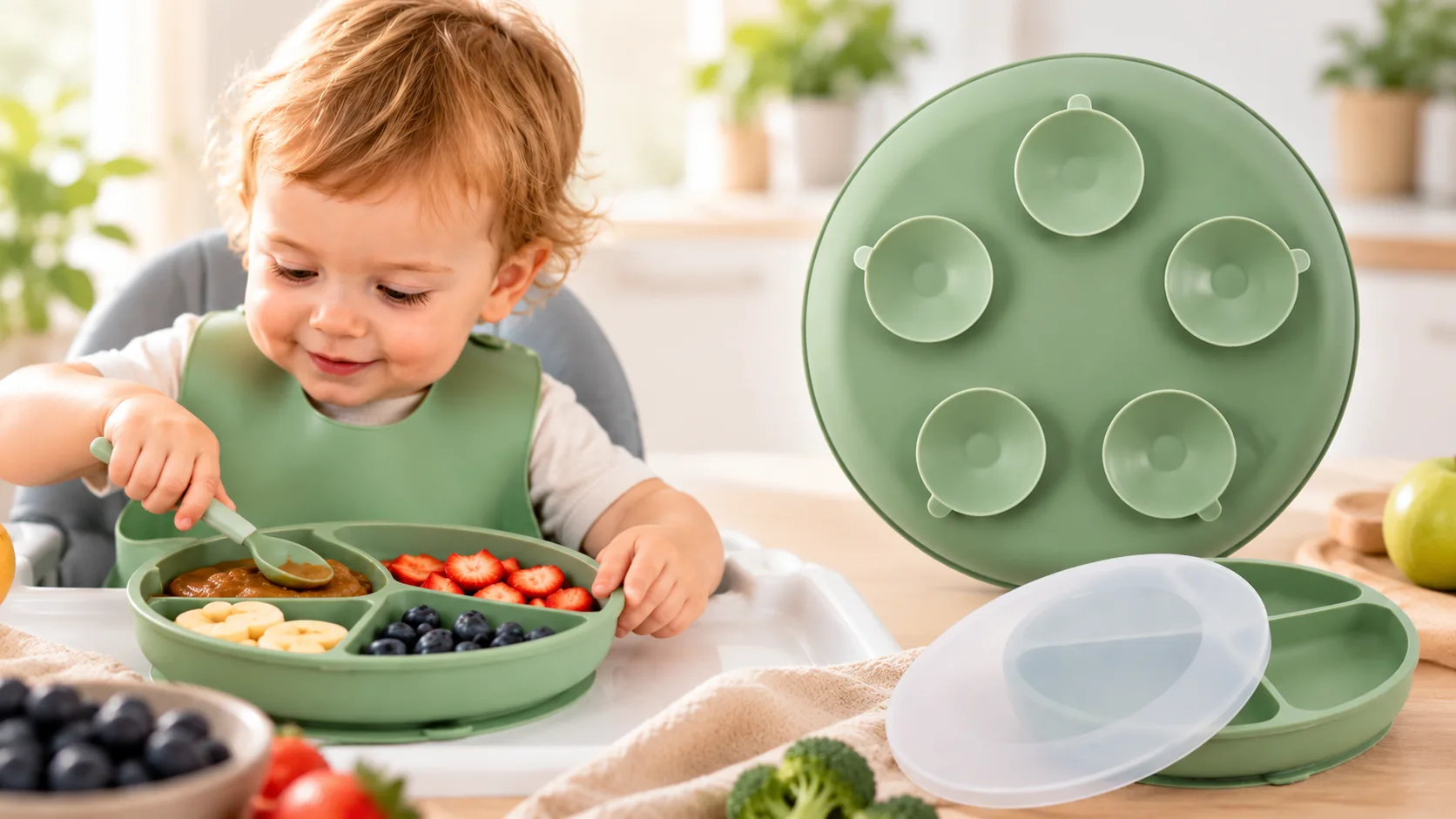
Do suction plates really work for babies?
A suction plate can help keep a dish in place while your baby learns to feed themselves. How well it works depends on the plate's design, the surface underneath and how it is positioned. Not every suction base will stick to every highchair tray. Even a firm grip cannot stop your baby picking up and dropping food, and a suction plate never replaces adult supervision.
My baby's suction plate won't stick: five things to check
Before replacing the plate, try these five checks. Many suction problems come down to the surface or the way the plate is fitted.
- Check the highchair tray. Suction cups generally form a better seal on smooth, clean, non-porous surfaces. Some highchair trays have textured finishes or curved areas.
- Clean both surfaces. Remove food residue, grease and dust from the tray and the suction cups, following the manufacturer's care instructions.
- Position and press. Place the plate on a flat area and press down gently as directed by the manufacturer.
- Check the grip before serving. Gently check whether the plate slides or lifts easily, without forcing it.
- Inspect the suction cups. Look for cracks, distortion or wear. Stop using a damaged product and follow the manufacturer's guidance.
Do not add glue, adhesives or accessories that are not intended for the product to try to improve its grip.
Which surfaces work best with suction plates?
| Surface | General guidance |
|---|---|
| Smooth glass | Generally favourable |
| Smooth plastic | Generally favourable if not textured |
| Smooth metal | May help form a seal |
| Smooth, varnished wood | Depends on the finish |
| Untreated, porous wood | May make sealing difficult |
| Rough or textured highchair tray | Often makes sealing difficult |
These are general guidelines, not test results for the PequeLuz plate. Check how it behaves on your own surface.
Why does my baby throw their plate or food on the floor?
When babies begin weaning, they are doing much more than eating. They explore textures, practise movements and discover what happens when they push, lift or let go of objects. Dropping food or trying to lift a plate can be part of that exploration; it does not necessarily mean your baby dislikes the food. Offer small amounts at a time, keep mealtimes calm and try not to turn every dropped piece into a struggle. A suction plate may help reduce movement of the dish, but it will not prevent every spill.
Introducing solid foods usually begins at around six months, when your baby shows signs of readiness. Speak to a healthcare professional if you are unsure.
How does a baby plate's suction base work?
A suction cup can hold in place when its rim forms a seal against a suitable surface. Pressing it down creates a difference in pressure that helps it grip. If air gets in because the surface is textured, curved or dirty, the hold may weaken. This is why both the surface and the design of the suction cup matter.
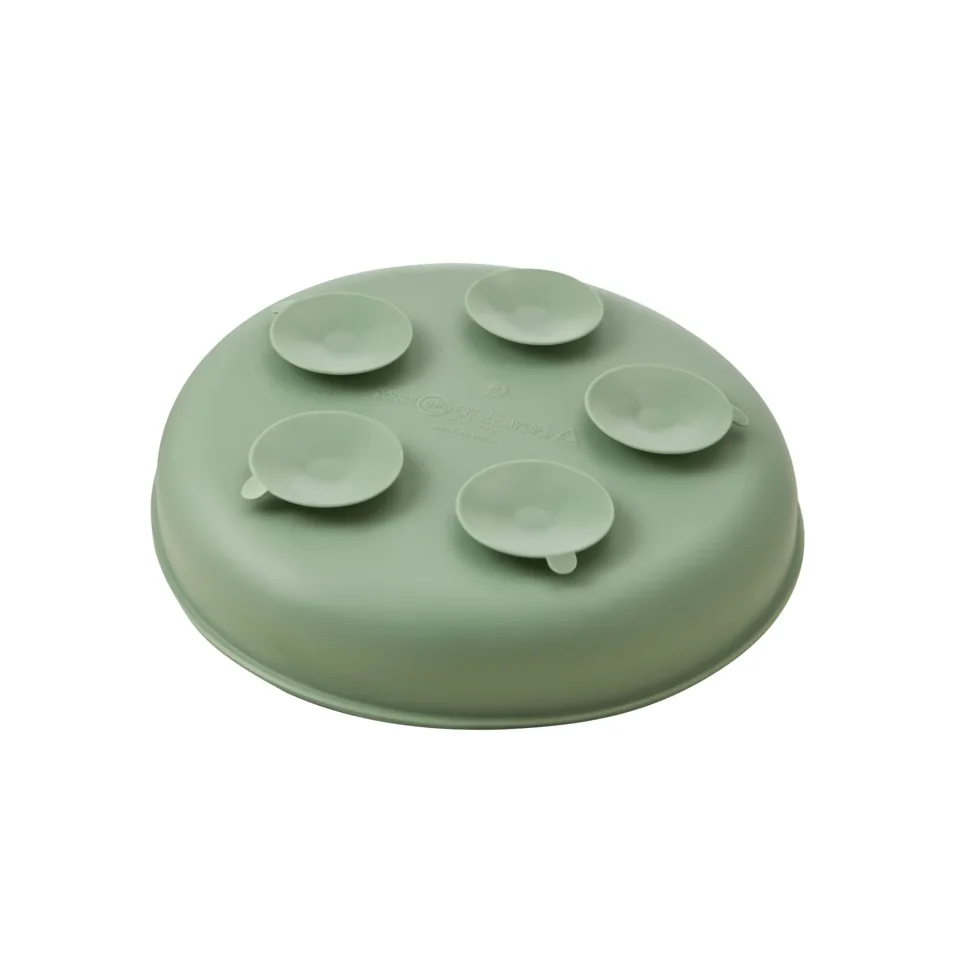
How to choose a BLW plate: five useful checks
- Stability and highchair compatibility. Check whether the base can form a reliable seal on your intended surface.
- Materials and food-contact documentation. Choose a product intended for food contact and consult its documentation.
- Size and compartments. Consider your baby's stage and how you serve food.
- Cleaning and care. Follow the manufacturer's instructions.
- Ease of positioning and removal. Make sure adults can fit and remove the plate correctly.
You do not have to buy a special plate to begin weaning. Some families offer food directly on a clean highchair tray suitable for food contact.
BLW starter kit for babies from six months
Does a plate with five suction cups grip better than one with four?
Not necessarily. The number of suction cups alone cannot tell you how strong the hold will be. Their size, shape, material, position and ability to form a seal also matter. The PequeLuz plate has five suction cups arranged across its base, as shown in the real product photographs. Controlled comparative testing would be needed before claiming it holds more firmly than another model.
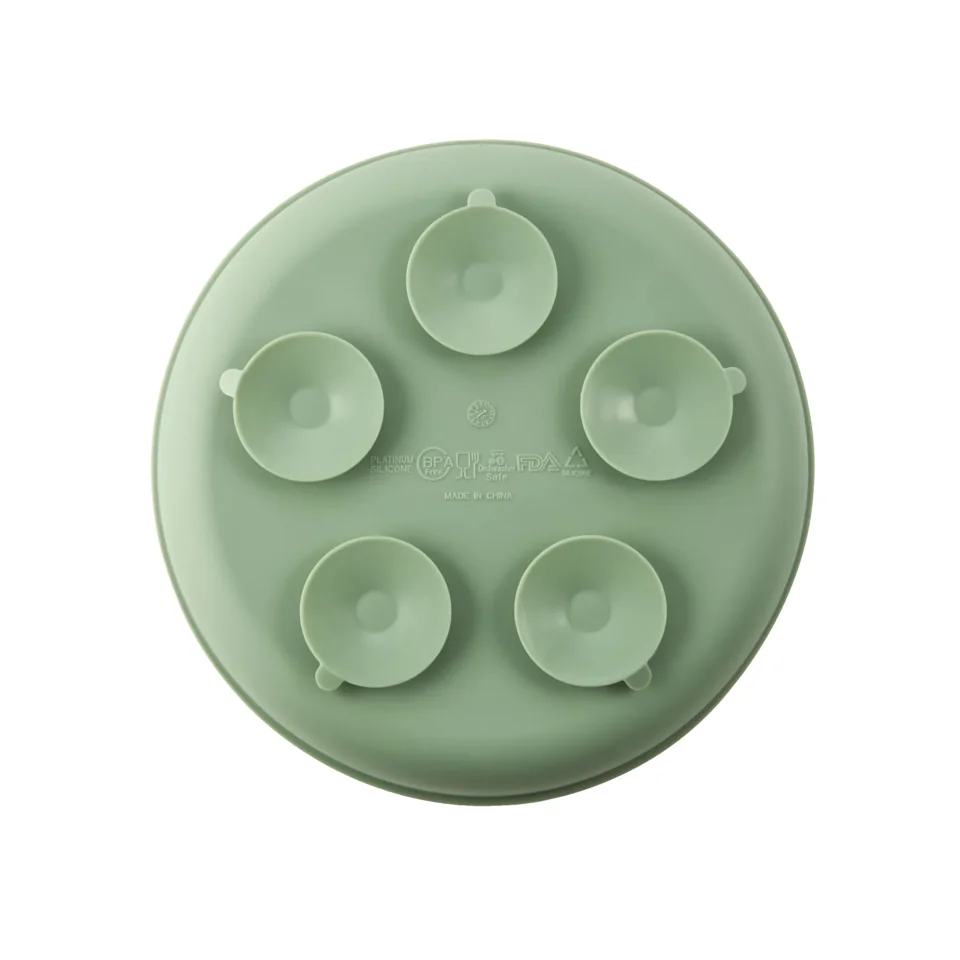
A closer look at the PequeLuz plate with five suction cups
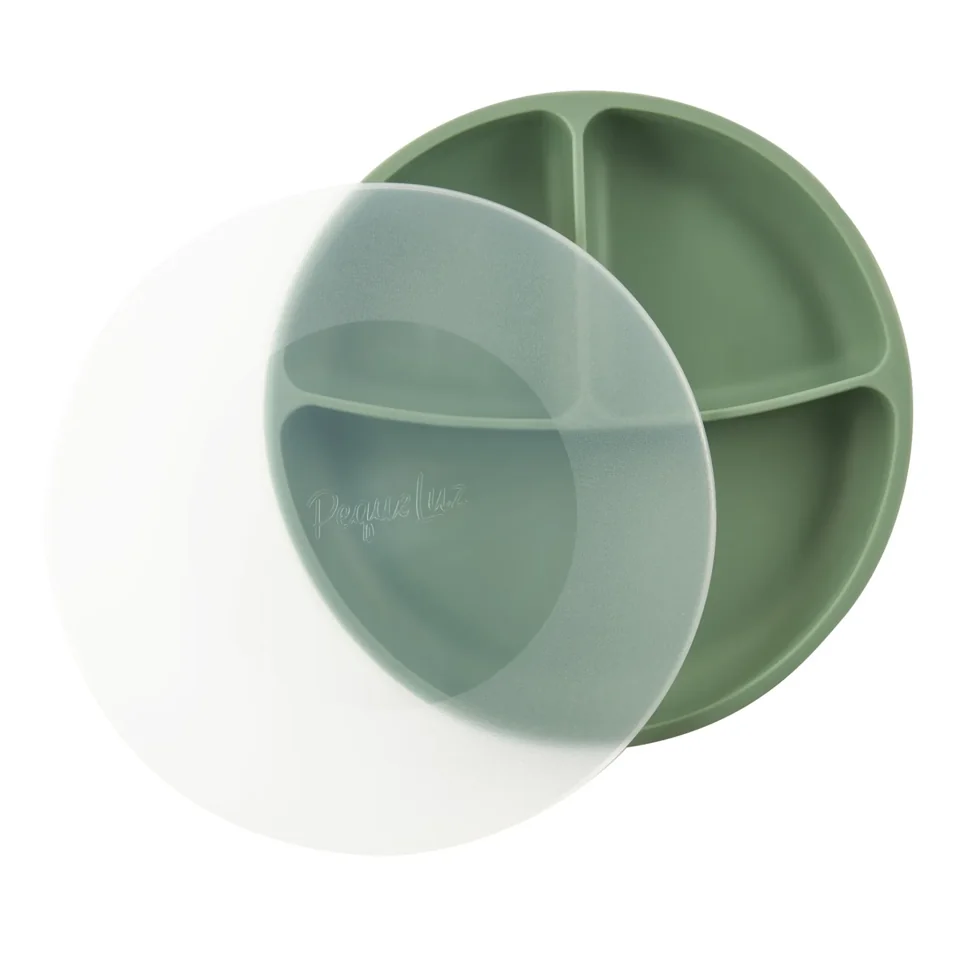
The PequeLuz plate has five suction cups underneath, three food compartments and a protective lid, as shown in the real product photographs. It is designed for children's mealtimes and to help keep different foods organised. How firmly it grips depends on the surface and how it is used.
PequeLuz’s own product
How to remove and care for a suction plate
Do not yank the plate upwards if it is firmly attached. If the model has release tabs designed for this purpose, follow the manufacturer's instructions to break the seal gently. Wash and dry the plate according to its care guidance. Check the suction cups regularly and stop using the product if it becomes damaged.
Frequently asked questions about baby suction plates
Why won't my baby's suction plate stick to the highchair tray?
If your baby's suction plate keeps coming unstuck, the problem isn't necessarily the suction cups themselves. It may be caused by the tray's surface, the way the plate is positioned or small amounts of grease and food residue.
Suction cups need to form a good seal against the surface. If the tray has a textured finish, raised patterns, curved sections or small irregularities, air can enter around the edges and weaken the grip.
What can you do? Start by cleaning the highchair tray and the underside of the plate with water and a suitable mild washing-up liquid. Rinse thoroughly and check that no residue remains. Next, place the plate on a flat area and press down gently to help the suction cups make contact.
If the plate still comes unstuck, try it on another smooth, non-porous surface, following the manufacturer's instructions. If it sticks properly to a smooth table but not to the highchair tray, the two surfaces may simply be incompatible.
Remember: no suction plate can guarantee a perfect grip on every material.
Do baby suction plates work on wooden tables?
Yes, suction plates can work on some wooden tables, but the result depends largely on the surface finish. A smooth, well-sealed, varnished wooden table may provide a suitable surface for certain suction cups. However, untreated, porous wood or wood with a pronounced grain can make it difficult for the suction cups to form the seal they need.
Before using the plate: Check that the surface is clean, reasonably flat and free from significant irregularities. Make sure the whole base of the plate can rest against the table. Press the suction cups down according to the manufacturer's instructions, then gently check whether the plate remains in place.
If the plate comes loose easily, do not try to force it to stick or use glue or other adhesives.
PequeLuz tip: a wooden table may look smooth without necessarily being compatible with every suction plate. A gentle grip check before serving food is the most practical way to assess the hold.
How can I make my baby's suction plate stick better?
To improve the grip, the most important things are preparing the surface properly and positioning the plate correctly. First, check that the table or highchair tray is smooth, stable and non-porous. Clean both the surface and the suction cups to remove grease, food residue and any remaining cleaning product.
Next, place the plate on a completely flat area and press down gently to help the suction cups form a seal. Before adding food, check that the plate does not move easily.
What if it still won't stick? Try another compatible surface. If the problem continues, inspect the suction cups for distortion, cracks or other signs of damage.
Some manufacturers recommend particular moisture conditions for their suction cups. There is no universal rule, so always follow the instructions supplied with your product. Avoid using glue, chemicals or heating methods that have not been approved by the manufacturer to increase the grip.
A suction plate should only be used under the conditions specified by its manufacturer.
How do I remove a suction plate without damaging it?
When a suction plate is firmly attached, pulling hard from the centre can put unnecessary strain on the material. Many suction cups have a small tab or edge designed to make removal easier.
If your plate has a manufacturer-approved release tab, gently lift it to allow air underneath and break the suction seal. Once the suction has been released, you should be able to remove the plate without pulling forcefully.
What should you avoid? Never use knives, sharp objects or tools that could cut or deform the silicone. Do not force the plate upwards while it is still firmly attached. If you are unsure how the release mechanism works, consult the manufacturer's instructions.
Removing the plate correctly can help protect its components and make everyday use easier.
Does my baby need a suction plate from six months old?
No. A suction plate is not essential when your baby starts weaning. The introduction of solid foods usually begins at around six months, when your baby shows the appropriate signs of readiness.
During the first meals, some families prefer to offer small amounts of food directly on a clean highchair tray. Others use suction plates or bowls to keep foods together and make mealtimes easier to organise. Both approaches can be practical, depending on your baby's developmental stage, how you offer food and your family's preferences.
When might a suction plate be useful? It may become particularly helpful when your baby starts exploring food with their hands, attempts to use a spoon or moves dishes around during meals. Divided compartments can also make it easier to serve different foods separately, although they are not necessary for learning to eat.
What matters most is offering developmentally appropriate foods, ensuring your baby is seated safely and supervising every meal.
Does a plate with five suction cups grip better than one with a single large suction base?
Not necessarily. The number of suction cups is only one factor affecting how firmly a plate stays in place. Their size, shape, flexibility, arrangement and ability to form a good seal also matter.
A plate with several suction cups has multiple contact points, while another design may use one larger suction base. However, you cannot determine which design provides greater resistance simply by counting the suction cups.
What should you look for when choosing? Check that the plate is compatible with the surface you intend to use, that it is straightforward to position and remove, and that its materials and dimensions are suitable for the intended purpose.
The PequeLuz plate features five suction cups arranged across its underside. This is a genuine design feature, but it does not mean we can claim that it provides five times more grip or outperforms every plate with four suction cups. Controlled comparative testing would be needed to demonstrate a difference in holding strength.
PequeLuz tip: choose a practical design that works with your highchair rather than relying solely on the number of suction cups.
Will a suction plate stop my baby throwing food on the floor?
A suction plate may make it harder for your baby to lift or move the dish, but it cannot stop them picking up food and dropping it. During the early stages of weaning, babies explore textures, practise movements and discover what happens when they release objects.
Dropping food does not necessarily mean that your baby dislikes what they are eating or is deliberately misbehaving.
How can you support your baby during this stage? Offer small amounts of food at a time, keep mealtimes calm and allow your baby to explore at their own pace. You can place a washable floor mat underneath the highchair to make cleaning up easier.
If your baby seems tired, uncomfortable or loses interest, pay attention to their cues rather than pressuring them to continue eating. A suction plate may help keep the dish in place, but learning to eat takes time and patience.
The aim is not to prevent every mess, but to create a safe, positive experience around food.
What should I do if the suction plate still won't stick after trying everything?
If you have cleaned the suction cups, checked the positioning and tried a suitable smooth surface but the plate still comes unstuck, it is worth inspecting the product itself. Look for distortion, cracks, cuts or damaged edges that could prevent the suction cups from forming a proper seal.
Also check that the plate is not resting on a curved area or a surface too small for all the suction cups to make full contact.
If the problem continues: Consult the manufacturer's instructions to see whether there are any recommendations specific to your model. If you suspect a manufacturing defect, contact the seller or manufacturer for advice. Do not attempt to repair the suction cups with adhesives or continue using a damaged product.
A practical alternative: while you resolve the issue, you can offer food directly on a clean highchair tray that is suitable for food contact, always under adult supervision.
Remember that a suction plate is a practical aid for organising mealtimes, not an essential requirement for learning to eat.
Supporting your baby's learning matters most
Choosing a suction plate can make everyday mealtimes more practical, but good results begin with a compatible surface and correct positioning. What matters most is supporting your baby patiently, offering foods appropriate for their developmental stage and supervising every meal. A suction plate is simply one of the tools that may help make this stage easier for the whole family.
Sources and further reading
NHS Start for Life — How to start weaning your baby
PequeLuz Academy — How to teach your baby to eat independently
Your next step
Keep learning with PequeLuz
Support your baby's first meals with patience, confidence and appropriate safety precautions.
Continue learningFind out how to choose a first spoon that suits your baby's hands and developmental stage.
Continue learningDiscover what you really need without buying unnecessary products.
Continue learning